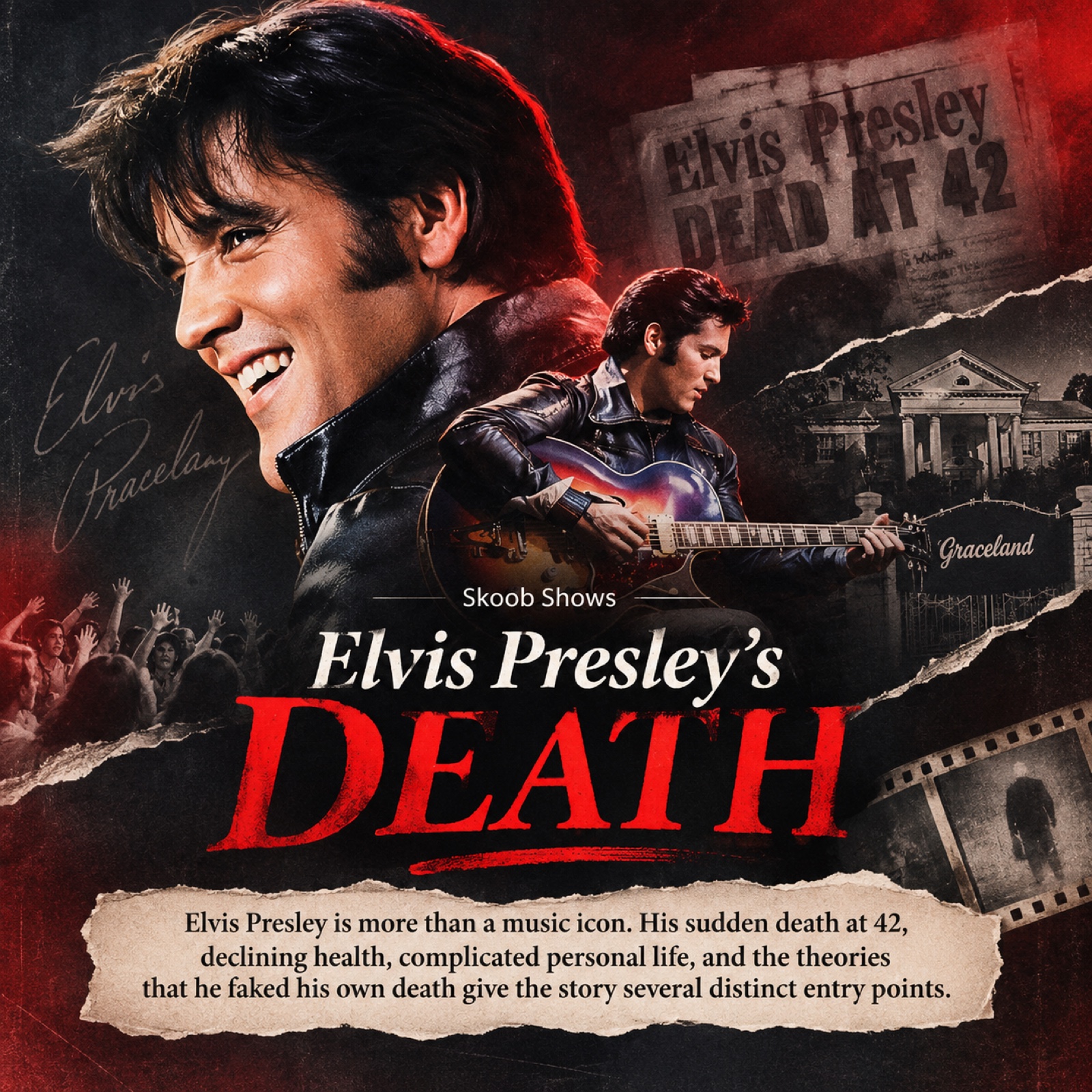
Elvis Presley’s Death
Episode architecture +
- King's Last Rock and RollThe rise, the decline, the final hours.
The episode establishes Elvis as a cultural phenomenon before tracing his deteriorating health and reconstructing the final night and morning at Graceland. It builds toward the discovery of his body.
- Pills, Prescriptions, and ParanoiaThe medical controversy behind the decline.
This episode moves from Elvis's personal dependence on prescription medication to the wider medical culture, the role of his doctors, and questions about responsibility and accountability.
- The Lonely KingThe person behind the public image.
This episode explores Elvis’ grief, relationships, spiritual searching, career frustrations, and isolation. It adds emotional context to the first two episodes and sets up the questions that follow his death.
- The King Never DiedFrom the official account to the conspiracy theories.
The final episode examines stories about the casket, alleged sightings, the John Burrows identity, witness protection, and the moved grave, then considers why these theories endure despite the lack of credible evidence that Elvis survived.
Script development +
The script I create is more than a collection of facts. Once I select a topic, I write the script and then reshape the material into a more deliberate listening experience.
- The opening hook: Establishing Elvis's final days through the cancelled concert in Portland, his declining health and the unanswered questions surrounding his death.
- The narrative sequence: Tracing his journey from his childhood in Tupelo and rise to fame to the pressures of stardom, personal struggles and final hours at Graceland.
- The episode architecture: Building the four-part story around Elvis's rise and decline, prescription medication and medical controversy, his personal life and isolation, and the conspiracy theories surrounding his death.
- The titles: Using references to Elvis's music, public image and enduring legacy to give each episode its own identity while reflecting its central theme.
- The transitions: Moving from the making of a cultural icon to the pressures behind his fame, the deterioration of his health and the circumstances surrounding his death.
- The editorial direction: Balancing Elvis's public legacy with his personal struggles, distinguishing the official account of his death from speculation, and building towards the questions that continue to surround his story.